Free Ebook Clinical Laboratory Hematology, by Shirlyn B. McKenzie
Book Clinical Laboratory Hematology, By Shirlyn B. McKenzie is among the priceless well worth that will make you consistently rich. It will certainly not indicate as rich as the cash provide you. When some individuals have absence to encounter the life, individuals with numerous books in some cases will be smarter in doing the life. Why should be book Clinical Laboratory Hematology, By Shirlyn B. McKenzie It is actually not suggested that publication Clinical Laboratory Hematology, By Shirlyn B. McKenzie will give you power to reach every little thing. Guide is to review and exactly what we implied is guide that is read. You could also see just how guide entitles Clinical Laboratory Hematology, By Shirlyn B. McKenzie and varieties of book collections are supplying here.
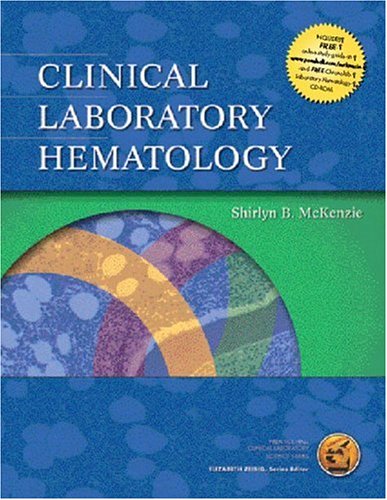
Clinical Laboratory Hematology, by Shirlyn B. McKenzie

Free Ebook Clinical Laboratory Hematology, by Shirlyn B. McKenzie
Clinical Laboratory Hematology, By Shirlyn B. McKenzie When creating can change your life, when writing can improve you by offering much cash, why don't you try it? Are you still really baffled of where understanding? Do you still have no idea with exactly what you are going to write? Currently, you will certainly require reading Clinical Laboratory Hematology, By Shirlyn B. McKenzie A good writer is a good visitor at the same time. You could specify exactly how you compose depending on just what publications to read. This Clinical Laboratory Hematology, By Shirlyn B. McKenzie could assist you to resolve the issue. It can be one of the right resources to create your writing ability.
Reading publication Clinical Laboratory Hematology, By Shirlyn B. McKenzie, nowadays, will not require you to constantly purchase in the establishment off-line. There is a terrific location to acquire guide Clinical Laboratory Hematology, By Shirlyn B. McKenzie by on the internet. This internet site is the best website with whole lots numbers of book collections. As this Clinical Laboratory Hematology, By Shirlyn B. McKenzie will certainly be in this publication, all publications that you require will be right here, also. Simply look for the name or title of guide Clinical Laboratory Hematology, By Shirlyn B. McKenzie You can locate what exactly you are hunting for.
So, even you require responsibility from the company, you might not be confused any more because books Clinical Laboratory Hematology, By Shirlyn B. McKenzie will constantly help you. If this Clinical Laboratory Hematology, By Shirlyn B. McKenzie is your ideal partner today to cover your job or work, you can when feasible get this book. Just how? As we have actually told formerly, merely go to the web link that our company offer here. The final thought is not only guide Clinical Laboratory Hematology, By Shirlyn B. McKenzie that you look for; it is just how you will certainly get several books to sustain your ability and also capability to have great performance.
We will certainly show you the best and simplest method to get book Clinical Laboratory Hematology, By Shirlyn B. McKenzie in this globe. Great deals of compilations that will sustain your responsibility will be here. It will certainly make you really feel so best to be part of this web site. Coming to be the participant to consistently see just what up-to-date from this publication Clinical Laboratory Hematology, By Shirlyn B. McKenzie site will make you really feel best to hunt for the books. So, just now, and also right here, get this Clinical Laboratory Hematology, By Shirlyn B. McKenzie to download and install and also save it for your priceless deserving.
For both CLT (MLT) and CLS (MT) hematology and hemostasis courses. This comprehensive--yet easy to read--hematology and hemostasis text is designed for students at all levels of clinical laboratory science. In each chapter, two levels of objectives and questions (fundamental and advanced) are presented, allowing instructors to customize content to fit their specific course focus. Case studies and checkpoints in each chapter help students apply and assess their knowledge as they progress.
- Sales Rank: #1217527 in Books
- Published on: 2006-04-03
- Ingredients: Example Ingredients
- Original language: English
- Number of items: 1
- Dimensions: 10.92" h x 1.55" w x 8.76" l, 4.86 pounds
- Binding: Hardcover
- 976 pages
From the Back Cover
Designed to meet the needs of both clinical laboratory technicians and clinical laboratory scientists, this comprehensive - yet easy to read - guide to hematology and hemostasis features cutting-edge technologies, high-quality photographs and micrographs, case studies, and convenient dual-level (basic and advanced) presentation of information. In each chapter, two levels of objectives and questions are presented, allowing content to fit specific course focus. Case studies and checkpoints in each chapter help apply and assess comprehension. Visual cross-referencing symbols throughout make finding information exceptionally easy.
- Features:
- Authoritative content from 24 contributors.
- Running case studies throughout each chapter.
- Checkpoints - questions, integrated throughout the chapter, with rationales provided.
- High-resolution, full-color blood and bone marrow photographs throughout.
- FREE CD-ROM contains a powerful database of images and self-assessment activities.
- FREE integrated website - www.prenhall.com/mckenzie - compliments the text with study-guide style quiz questions and immediate tabulation of quiz results.
- Detailed discussions of ethical issues and management issues.
- The new technologies of molecular diagnostics, flow cytometry and cytogenetics presented here in a very easily understood manner.
Excerpt. � Reprinted by permission. All rights reserved.
Clinical Laboratory Hematology is a comprehensive, yet easy-to-read text of hematology and hemostasis written for students at all levels in clinical laboratory science programs, including clinical laboratory technicians, CLT (medical laboratory technicians, NET), and clinical laboratory scientists, CIS (medical technologists, MT). Other health professional students and practitioners may also benefit from this book, including pathology residents, physician assistants, and nurse practitioners. This text replaces Textbook of Hematology published by Lea & Febiger in 1988 and by Williams & Wilkins in 1996. However this text should be considered as a brand new publication because of its wide variety of changes and enhancements. Included among these changes are the following: we have assembled an extensive team of authoritative contributing authors to write chapters on specialized subjects within their respective fields of expertise; we have developed a striking design that will be conducive to today's visually oriented student; we have developed an exciting set of learning features that will help readers grasp the content more easily; we have developed a book-specific online study guide (wwwprenhall.com/mckenzie); and finally, we have packaged the text with a free student version of the Chronolab CD-ROM photomicrograph atlas.
ORGANIZATION OF THE BOOKUnderstanding hematologic/hemostatic diseases is dependent on a thorough knowledge and understanding of normal processes. Thus, the book begins with a section on normal hematopoiesis and progresses through anemias, nonmalignant and malignant leukocyte disorders. Hemostasis adheres to a similar format with normal hemostasis functions discussed first, followed by abnormalities in hemostasis.
The text is divided into sections and maybe studied by section or chapter sequence. This gives the instructor flexibility td fit the book to their specific course design. The first two sections cover an introduction to hematology and normal hematopoiesis. This includes a discussion of the cell morphology, cell cycle, and its regulation. The section includes a discussion on oncogenes emphasizing the concept that neoplasms are the result of mutations in normal genes that control cell proliferation and development. This concept is further discussed in the introduction to hematopoietic neoplasms. The third section, includes procedures that are routine and performed in most laboratories. These are included at the beginning of the book so the students will have basic laboratory test information as they proceed through the subsequent chapters on hematopoietic disorders which focus on laboratory diagnostic protocols.
The next sections cover the hematopoietic disorders and special laboratory procedures. The fourth section includes the anemias and begins with an introduction to anemia chapter. The fifth section is nonmalignant disorders of the leukocytes. The sixth section includes a discussion of special laboratory procedures that are useful in diagnosis and classification of hematopoietic neoplasms: flow cytometry, cytogenetics, and molecular diagnostics. This section may be studied before or after the seventh section on neoplastic hematopoietic disorders, depending on the reader's knowledge level of the neoplasms. If this is the reader's first exposure to the neoplasms, it may be better to cover section 7 before section 6. Alternatively, sections 6 and 7 can be integrated and studied together.
Section 8 is a study of body fluids. Body fluid analysis is often a function of the hematology laboratory, since analysis includes cell counts and review of cell morphology. As much of the analysis includes identification of cells and differentiation of malignant cells from reactive or normal cells, this section has many microphotographs.
Section 9 is a study of hemostasis. It begins with a study of normal hemostasis processes and proceeds to abnormalities that are associated with bleeding and thrombosis. Due to the high frequency of thrombotic disorders and the rapid discovery of mechanisms responsible for thrombosis, the laboratory's role in diagnosis of thrombotic disorders is expanding. Thus, an entire chapter is devoted to hypercoagulability (thrombophilia). This section also includes laboratory testing procedures for evaluation of hemostasis.
The last section includes special hematology procedures and quality assurance and safety in the laboratory. Automation in hematology and hemostasis will be supplemented on the Web page with extensive use of graphics to illustrate abnormal results and teach evaluation and interpretation of data.
The book incorporates ethical issues and management issues of test utilization and value, as well as critical testing pathways. This is the soft side of science but alerts the students to issues they will be facing in their work and communities. In many cases the laboratorian is the one who has the breadth of information needed to help make critical decisions involving the laboratory and its effective, efficient, ethical use.
SUITS ALL LEVELS OF LEARNINGThis book has been designed for both CLT/MLT and CLS/MT students. Using only one textbook is beneficial and economical in laboratory science programs offering both levels. Use of the book is also helpful to programs that design articulated curricula. The CLS/MT program can be confident of the CLT's/MLT's knowledge level in hematology without doing an extensive CLT/MLT course analysis.
CLT/MLT instructors will need to communicate to their students what is expected of them. They may want their students to find the information in the text that allows them to satisfy the checklist, or they may assign particular sections to read. If not assigned specific sections, the CLT/MLT student may read more than expected which is certainly not a bad thing! The students and instructors should use the checklists to determine the material to be read.
The case study questions and checkpoints are not delineated by level. CLT/MLT students should try to answer as many of these as possible. CLT/MLT instructors should select appropriate chapters for their students. Some chapters, such as molecular techniques, cytogenetics, and flow cytometry may not be included in a CLT/MLT curriculum. Each program will need to assess what fits its particular curriculum.
CLS/MT students should be able to meet both Level I and Level II checklists in most cases, but of course there may be differences among expectations of programs. Therefore, instructors are encouraged to review the checklists to ensure their appropriateness for the course. Although all chapters are appropriate for the CLS/MT student, if the program has two levels of hematology courses, Level I and Level II, instructors may choose to use the book as for a CLT/MLT program in the first course and the remainder of the book in the second course.
In all cases the instructor should begin the course with sections 1 through 3. The remaining sections can be rearranged and used as the instructor desires. The "Background Basics" feature will help the instructor determine which concepts the student should have mastered before beginning a unit of study. This concept should help instructors customize their courses.
UNIQUE PEDAGOGICAL FEATURESThis text has a number of unique pedagogical features that will help the student assimilate, organize, and understand the information. Each chapter begins with a group of components intended to set the stage for the content to follow.
- Background Basics alert students to material that should be learned or reviewed before starting the chapter. In most cases it refers readers to previous chapters to help them find the material if they want to review it.
- Objectives are comprised of two levels of checklists: Level I for basic or essential information and Level II for more advanced information. These checklists were reviewed by clinical (medical) laboratory technician (CLT/MLT) educators who made recommendations that aimed the Level I checklists to their students. Clinical laboratory science/medical technologist (CLS/MT) educators may expect their students to meet both Level I and Level II checklists requirements.
- Overview gives the reader an idea of the chapter content and organization.
Each chapter offers students a variety of opportunities to assess their knowledge and ability to apply it.
- Case Study is a running case feature that first appears at the beginning of each chapter and focuses the student's attention on the subject matter that the chapter will cover. Throughout the chapter at appropriate places, additional information on the case may be given such as laboratory test results, and then questions are asked. The questions relate to the material presented in preceding sections. There is a case summary and answers to the questions in the appendix.
- Checkpoints! are integrated throughout the chapter. These are questions that require the student to pause along the way to recall or apply information covered in preceding sections. The answers are in the appendix.
- Summary concludes the text portion of each chapter in order to help the student bring all the material together.
- Review Questions appear at the end of each chapter. There are two sets of questions, Level I and Level II, that are referenced to the Level I and Level II objectives checklists. Answers are in the appendix.
The page design features a number of enhancements intended to aid the learning process.
- Bold symbols are used within the chapter text to help the student quickly cross-reference from the tables and figures to the text.
- A oo symbol is also used when referring the student to another chapter.
- Figures and tables are used liberally to help the student organize and conceptualize information. This is especially important to visual learners.
- Algorithms (critical pathways, reflex testing pa...
Most helpful customer reviews
1 of 1 people found the following review helpful.
poorly edited and organized, hard to read
By Amazon Customer
I really hated to read this book for my hematology class just because it's the required one. I know there will be tons of info. in the book considering the book is written by phDs, but find it very hard to focus and understand due to the way they lay the information out. Basically they just spread out the info. in a repetitive, lengthy and sometimes ambiguous fashion. If the book is well edited, or they use more concise language, it will be much thinner and useful to grab the whole picture of the subject without leaving the details out. The credits only go to the nice pictures and descriptions.
0 of 0 people found the following review helpful.
Great book, Great service from Amazon
By Michelle
Like I have said previously, I have been ordering my books from Amazon.com because they are cheaper and more reliable. I ordered my book after my Clinical Hematology class had already started and was scared I be behind because I didn't have my book. Well I got my book on time from Amazon and went to class that night. Other students still didn't have their books due to the University not having them in stock yet. Well I had my book, while the others had to wait.
Order from Amazon.com, fast and reliable service.
0 of 0 people found the following review helpful.
So Useful
By ChristinaDownes
I loved this book. The photos helped immensely because I am taking a non-lab version of clinical hematology. The topics are easily searchable. You will use this book for other classes, so hold onto it! I've already used it for virology, hematology, and now I'm using it for microbiology. Even though the focus is on hematology, there are tie in topics for other subjects. This textbook is going on my shelf for graduate school.
Clinical Laboratory Hematology, by Shirlyn B. McKenzie PDF
Clinical Laboratory Hematology, by Shirlyn B. McKenzie EPub
Clinical Laboratory Hematology, by Shirlyn B. McKenzie Doc
Clinical Laboratory Hematology, by Shirlyn B. McKenzie iBooks
Clinical Laboratory Hematology, by Shirlyn B. McKenzie rtf
Clinical Laboratory Hematology, by Shirlyn B. McKenzie Mobipocket
Clinical Laboratory Hematology, by Shirlyn B. McKenzie Kindle

Tidak ada komentar:
Posting Komentar