Senin, 17 September 2012

[O763.Ebook] Ebook Download Minimalist Baker's Everyday Cooking: 101 Entirely Plant-Based, Mostly Gluten-Free, Easy and Delicious Recipes, by Dana Shultz

Ebook Download Minimalist Baker's Everyday Cooking: 101 Entirely Plant-Based, Mostly Gluten-Free, Easy and Delicious Recipes, by Dana Shultz

Minimalist Baker's Everyday Cooking: 101 Entirely Plant-Based, Mostly Gluten-Free, Easy And Delicious Recipes, By Dana Shultz. Learning how to have reading behavior is like discovering how to attempt for eating something that you truly do not really want. It will need even more times to aid. In addition, it will certainly additionally little pressure to offer the food to your mouth as well as ingest it. Well, as checking out a book Minimalist Baker's Everyday Cooking: 101 Entirely Plant-Based, Mostly Gluten-Free, Easy And Delicious Recipes, By Dana Shultz, sometimes, if you must read something for your brand-new works, you will certainly really feel so woozy of it. Even it is a publication like Minimalist Baker's Everyday Cooking: 101 Entirely Plant-Based, Mostly Gluten-Free, Easy And Delicious Recipes, By Dana Shultz; it will certainly make you really feel so bad.

Minimalist Baker's Everyday Cooking: 101 Entirely Plant-Based, Mostly Gluten-Free, Easy and Delicious Recipes, by Dana Shultz

Minimalist Baker's Everyday Cooking: 101 Entirely Plant-Based, Mostly Gluten-Free, Easy and Delicious Recipes, by Dana Shultz


Minimalist Baker's Everyday Cooking: 101 Entirely Plant-Based, Mostly Gluten-Free, Easy and Delicious Recipes, by Dana Shultz

Ebook Download Minimalist Baker's Everyday Cooking: 101 Entirely Plant-Based, Mostly Gluten-Free, Easy and Delicious Recipes, by Dana Shultz

Exactly how if your day is begun by reading a publication Minimalist Baker's Everyday Cooking: 101 Entirely Plant-Based, Mostly Gluten-Free, Easy And Delicious Recipes, By Dana Shultz Yet, it is in your gizmo? Everyone will still touch and us their gadget when waking up as well as in early morning activities. This is why, we intend you to also read a publication Minimalist Baker's Everyday Cooking: 101 Entirely Plant-Based, Mostly Gluten-Free, Easy And Delicious Recipes, By Dana Shultz If you still confused the best ways to get guide for your gadget, you could adhere to the way here. As right here, we offer Minimalist Baker's Everyday Cooking: 101 Entirely Plant-Based, Mostly Gluten-Free, Easy And Delicious Recipes, By Dana Shultz in this internet site.

Just how can? Do you believe that you don't require adequate time to go with purchasing book Minimalist Baker's Everyday Cooking: 101 Entirely Plant-Based, Mostly Gluten-Free, Easy And Delicious Recipes, By Dana Shultz Don't bother! Just sit on your seat. Open your kitchen appliance or computer as well as be online. You could open or see the web link download that we gave to get this Minimalist Baker's Everyday Cooking: 101 Entirely Plant-Based, Mostly Gluten-Free, Easy And Delicious Recipes, By Dana Shultz By by doing this, you could obtain the on-line e-book Minimalist Baker's Everyday Cooking: 101 Entirely Plant-Based, Mostly Gluten-Free, Easy And Delicious Recipes, By Dana Shultz Reading guide Minimalist Baker's Everyday Cooking: 101 Entirely Plant-Based, Mostly Gluten-Free, Easy And Delicious Recipes, By Dana Shultz by on the internet can be actually done conveniently by waiting in your computer and device. So, you could proceed every time you have complimentary time.

Checking out the e-book Minimalist Baker's Everyday Cooking: 101 Entirely Plant-Based, Mostly Gluten-Free, Easy And Delicious Recipes, By Dana Shultz by on-line could be additionally done easily every where you are. It seems that waiting the bus on the shelter, waiting the listing for line up, or various other areas possible. This Minimalist Baker's Everyday Cooking: 101 Entirely Plant-Based, Mostly Gluten-Free, Easy And Delicious Recipes, By Dana Shultz could accompany you in that time. It will not make you really feel weary. Besides, in this manner will also enhance your life quality.

So, merely be below, locate the publication Minimalist Baker's Everyday Cooking: 101 Entirely Plant-Based, Mostly Gluten-Free, Easy And Delicious Recipes, By Dana Shultz now and read that rapidly. Be the very first to read this e-book Minimalist Baker's Everyday Cooking: 101 Entirely Plant-Based, Mostly Gluten-Free, Easy And Delicious Recipes, By Dana Shultz by downloading in the link. We have a few other books to read in this website. So, you could find them additionally conveniently. Well, now we have actually done to provide you the very best publication to review today, this Minimalist Baker's Everyday Cooking: 101 Entirely Plant-Based, Mostly Gluten-Free, Easy And Delicious Recipes, By Dana Shultz is actually ideal for you. Never ever disregard that you need this e-book Minimalist Baker's Everyday Cooking: 101 Entirely Plant-Based, Mostly Gluten-Free, Easy And Delicious Recipes, By Dana Shultz to make much better life. Online book Minimalist Baker's Everyday Cooking: 101 Entirely Plant-Based, Mostly Gluten-Free, Easy And Delicious Recipes, By Dana Shultz will truly give very easy of every little thing to check out and take the perks.

Minimalist Baker's Everyday Cooking: 101 Entirely Plant-Based, Mostly Gluten-Free, Easy and Delicious Recipes, by Dana Shultz

 Husband-wife team Dana and John Shultz founded the Minimalist Baker blog in 2012 to share their passion for simple cooking and quickly gained a devoted following of millions worldwide. Now, in this long-awaited debut cookbook, Dana shares 101 vibrant, simple recipes that are entirely plant-based, mostly gluten-free, and 100% delicious. Each recipe requires 10 ingredients or fewer, can be made in one bowl, or requires 30 minutes or less to prepare. It's a totally no-fuss approach to cooking that is perfect for anyone who loves delicious food that happens to be healthy too.

     With recipes for hearty entrées, easy sides, nourishing breakfasts, and decadent desserts, Simply Vegan will help you get plant-based meals that everyone will enjoy on the table in a snap, and have fun doing it. With essential plant-based pantry and equipment tips, along with helpful nutrition information provided for each and every recipe, this cookbook takes the guesswork out of vegan cooking with recipes that work every time.

  • Sales Rank: #4333948 in Books
  • Published on: 2016-04-26
  • Released on: 2016-04-26
  • Format: International Edition
  • Dimensions: 10.30" h x 1.10" w x 8.20" l,
  • Binding: Hardcover
  • 304 pages

Review
“Dana understands that plant-based cuisine should be accessible to the masses. You will fall in love with her approachable recipes using familiar ingredients!”—Angela Liddon, author of the New York Times bestseller The Oh She Glows Cookbook
 
“Very vegan and often gluten-free Minimalist Baker’s Everyday Cooking doesn’t miss a beat in delivering approachable, comforting, and reliable recipes for the serious vegan or hungry cook who just happens to be out of eggs and cream. This book is a new staple in my kitchen.” —Joy Wilson, creator of the Saveur award-winning blog Joy the Baker
 
“The love for delicious and exciting food shines from these pages, and it all happens to be vegan and (mostly) gluten-free. Dana has carefully considered time, ease, flavour, accessibility, and any possible occasion with these colourful recipes. Comforting and beautiful food for all!” —Laura Wright, creator of the Saveur award-winning blog The First Mess
 
“There are certainly days for farmers market strolls and lingering over the stove, but I also appreciate plant-based recipes that are concise and easy to follow. This book is an excellent resource for those not eating dairy or animal proteins while still providing plenty of flavor for omnivores alike. I often reach for cheese when I am looking for richness and flavor but am excited to try some of Dana's alternative ideas.” —Sara Forte, author of The Sprouted Kitchen and Sprouted Kitchen: Bowl + Spoon

About the Author
Dana Shultz is the recipe developer and co-author of Minimalist Baker, which she founded with her husband, John, in 2012. Dana creates the recipes, the photographs, and the blog content, while John designs, codes, develops products, and plays visionary. The couple is situated in Portland, Oregon, where they indulge in all the craft coffee, wine, and food they can get their hands on.

Most helpful customer reviews

128 of 135 people found the following review helpful.
Beautiful cookbook
By Anon
I've been reading Dana's blog for a year now, and I absolutely love how easy and simple her recipes are. This book does not disappoint! The pictures are amazing and it is filled with delicious-sounding recipes. It does contain a substantial number of drinks/smoothies (about 10% of the recipes), which I don't really care for- especially in the breakfast section. That being said, I'm sure others will enjoy them and the rest of the recipes more than make up for it. One other criticism is I have is that the picture of the food sometimes appears after the recipe and sometimes before, which can be off-putting if you're a*** about things like that. I will update this review with pictures as I cook recipes from the book.

Also, if you order the book and send a copy of the receipt to this email address: bundle@minimalistbaker.com
You get an additional 5 recipes in your inbox.

ETA: Made the Thai quinoa meatballs today. Yum!

24 of 24 people found the following review helpful.
Great.
By Batman0903
I am non vegan and I bought this for my vegan girlfriend. She loves it and already made something from it. The spicy BBQ Jackfruit sandwich is awesome. Extremely tasty.

61 of 66 people found the following review helpful.
I love this cookbook for so many reasons
By Liz
I love this cookbook for so many reasons....
1. The recipes are delicious. I've never tried a recipe from minimalist baker that wasn't good and the recipes in this cookbook are no exception!
2. The meals are simple to make and the author Dana provides all the instruction you need to cook with confidence even if you are not very experienced in the kitchen.
3. Most of the recipes are very nutritious but at the same time do not sacrifice flavor. The few recipes that are not "healthy" is just because they are treats meant to be enjoyed every once in a while. The jumbo chocolate chip cookies come to mind :D (and you would never guess they were vegan)
4. Everything in this book is vegan and cruelty free! Every recipe is free of meat, dairy and eggs and most of the recipes are gluten free or can be extremely easily made gluten free. I think just about anyone could eat food out of this cookbook and be more than satisfied.
5. The photography of the food is beautiful! It's so fun to just flip through it. Even if i'm not going to choose a recipe to make, it's still fun to just go through the book and look at the pictures and think "wow that looks great"

All around this is a great cookbook and I am looking forward to the next one minimalist baker puts out!

See all 339 customer reviews...

Minimalist Baker's Everyday Cooking: 101 Entirely Plant-Based, Mostly Gluten-Free, Easy and Delicious Recipes, by Dana Shultz PDF
Minimalist Baker's Everyday Cooking: 101 Entirely Plant-Based, Mostly Gluten-Free, Easy and Delicious Recipes, by Dana Shultz EPub
Minimalist Baker's Everyday Cooking: 101 Entirely Plant-Based, Mostly Gluten-Free, Easy and Delicious Recipes, by Dana Shultz Doc
Minimalist Baker's Everyday Cooking: 101 Entirely Plant-Based, Mostly Gluten-Free, Easy and Delicious Recipes, by Dana Shultz iBooks
Minimalist Baker's Everyday Cooking: 101 Entirely Plant-Based, Mostly Gluten-Free, Easy and Delicious Recipes, by Dana Shultz rtf
Minimalist Baker's Everyday Cooking: 101 Entirely Plant-Based, Mostly Gluten-Free, Easy and Delicious Recipes, by Dana Shultz Mobipocket
Minimalist Baker's Everyday Cooking: 101 Entirely Plant-Based, Mostly Gluten-Free, Easy and Delicious Recipes, by Dana Shultz Kindle

Minimalist Baker's Everyday Cooking: 101 Entirely Plant-Based, Mostly Gluten-Free, Easy and Delicious Recipes, by Dana Shultz PDF

Minimalist Baker's Everyday Cooking: 101 Entirely Plant-Based, Mostly Gluten-Free, Easy and Delicious Recipes, by Dana Shultz PDF

Minimalist Baker's Everyday Cooking: 101 Entirely Plant-Based, Mostly Gluten-Free, Easy and Delicious Recipes, by Dana Shultz PDF

[T304.Ebook] Ebook Download Death of a Salesman, by Arthur Miller

Ebook Download Death of a Salesman, by Arthur Miller

Downloading and install guide Death Of A Salesman, By Arthur Miller in this site listings can make you more advantages. It will reveal you the most effective book collections and also completed compilations. Many publications can be found in this site. So, this is not just this Death Of A Salesman, By Arthur Miller However, this publication is referred to review considering that it is an impressive publication to provide you much more opportunity to get experiences as well as ideas. This is easy, read the soft data of the book Death Of A Salesman, By Arthur Miller and you get it.

Death of a Salesman, by Arthur Miller

Death of a Salesman, by Arthur Miller


Death of a Salesman, by Arthur Miller

Ebook Download Death of a Salesman, by Arthur Miller

Why need to wait for some days to obtain or obtain the book Death Of A Salesman, By Arthur Miller that you get? Why ought to you take it if you could get Death Of A Salesman, By Arthur Miller the much faster one? You could find the very same book that you purchase right here. This is it the book Death Of A Salesman, By Arthur Miller that you can obtain directly after purchasing. This Death Of A Salesman, By Arthur Miller is popular book worldwide, of course many individuals will aim to own it. Why do not you become the first? Still perplexed with the way?

Reading routine will constantly lead people not to completely satisfied reading Death Of A Salesman, By Arthur Miller, a book, ten book, hundreds books, as well as much more. One that will make them really feel completely satisfied is completing reviewing this publication Death Of A Salesman, By Arthur Miller and obtaining the message of the e-books, then finding the other following publication to read. It proceeds a growing number of. The moment to complete reviewing a book Death Of A Salesman, By Arthur Miller will be constantly various depending on spar time to spend; one example is this Death Of A Salesman, By Arthur Miller

Now, how do you recognize where to purchase this e-book Death Of A Salesman, By Arthur Miller Don't bother, now you might not go to the book establishment under the brilliant sun or night to browse the publication Death Of A Salesman, By Arthur Miller We below consistently assist you to find hundreds sort of publication. Among them is this e-book qualified Death Of A Salesman, By Arthur Miller You might go to the web link web page provided in this set and also then choose downloading and install. It will certainly not take even more times. Simply link to your website access as well as you can access the e-book Death Of A Salesman, By Arthur Miller online. Obviously, after downloading Death Of A Salesman, By Arthur Miller, you might not print it.

You could conserve the soft file of this book Death Of A Salesman, By Arthur Miller It will rely on your extra time and also tasks to open up as well as read this book Death Of A Salesman, By Arthur Miller soft data. So, you could not be terrified to bring this e-book Death Of A Salesman, By Arthur Miller almost everywhere you go. Just include this sot documents to your gadget or computer system disk to allow you review each time and everywhere you have time.

Death of a Salesman, by Arthur Miller

Stacy Keach and Jane Kaczmarek star in Arthur Miller's 1949 masterpiece, a searing portrait of the physical, emotional, and psychological costs of the American dream. Willy Loman is the play's iconic traveling salesman, whose family is torn apart by his desperate obsession with greatness and social acceptance. As his two sons cast about aimlessly for their station in life, Willy begins to come unraveled when the reality of his life threatens his long-cherished illusions.

An L.A. Theatre Works full cast performance featuring:

Stacy Keach as Willy Loman

Jane Kaczmarek as Linda Loman

Steven Culp as Biff Loman

Maureen Flannigan as Letta/Jenny

Jason Henning as Bernard/Stanley

Kathryn Meisle as The Woman

Tim Monsion as Uncle Ben

Sam McMurray as Charley

John Sloan as Happy Loman

Kate Steele as Miss Forsythe

Kenneth Alan Williams as Howard

Directed by Eric Simonson. Recorded before a live audience.

  • Sales Rank: #1411989 in Books
  • Published on: 2016-04-26
  • Released on: 2016-04-26
  • Formats: Audiobook, MP3 Audio, Unabridged
  • Original language: English
  • Number of items: 1
  • Dimensions: 6.75" h x .50" w x 5.25" l,
  • Running time: 2 Hours
  • Binding: MP3 CD

Amazon.com Review
Arthur Miller's 1949 Death of a Salesman has sold 11 million copies, and Willy Loman didn't make all those sales on a smile and a shoeshine. This play is the genuine article--it's got the goods on the human condition, all packed into a day in the life of one self-deluded, self-promoting, self-defeating soul. It's a sturdy bridge between kitchen-sink realism and spectral abstraction, the facts of particular hard times and universal themes. As Christopher Bigsby's mildly interesting afterword in this 50th-anniversary edition points out (as does Miller in his memoir, Timebends), Willy is closely based on the playwright's sad, absurd salesman uncle, Manny. But of course Miller made Manny into Everyman, and gave him the name of the crime commissioner Lohmann in Fritz Lang's angst-ridden 1932 Nazi parable, The Testament of Dr. Mabuse.

The tragedy of Loman the all-American dreamer and loser works eternally, on the page as on the stage. A lot of plays made history around 1949, but none have stepped out of history into the classic canon as Salesman has. Great as it was, Tennessee Williams's work can't be revived as vividly as this play still is, all over the world. (This edition has edifying pictures of Lee J. Cobb's 1949 and Brian Dennehy's 1999 performances.) It connects Aristotle, The Great Gatsby, On the Waterfront, David Mamet, and the archetypal American movie antihero. It even transcends its author's tragic flaw of pious preachiness (which undoes his snoozy The Crucible, unfortunately his most-produced play).

No doubt you've seen Willy Loman's story at least once. It's still worth reading. --Tim Appelo

From Library Journal
This 50th-anniversary edition of Miller's masterpiece, which certainly is a contender for the finest American drama of the 20th century, includes the full text of the play, a chronology of its productions, photos from various stagings including the current Broadway revival, and a new preface by Miller himself, all in a quality hardcover for a reasonable price. Bravo, Penguin.
Copyright 1999 Reed Business Information, Inc.

Review
 "By common consent, this is one of the finest dramas in the whole range of the American theater." —Brooks Atkinson, The New York Times

"So simple, central, and terrible that the run of playwrights would neither care nor dare to attempt it." —Time

Most helpful customer reviews

0 of 0 people found the following review helpful.
Tells the truth about the American dream
By HH
Any thoughtful, bookish American who hasn't read "Death of a Salesman" has done himself or herself a cultural disservice of the first order. While there are many things that make "Death of a Salesman" one of the greatest plays of the 20th century, to this reviewer's mind the play's many themes are the key. One of the play's main themes is reality vs. illusion. "Death of a Salesman" makes frequent use of flashbacks to present Willy’s memory during the reality. The illusion not only suggests the past, but also presents the lost pastoral life. Willy has dreamed of success his whole life and makes up lies about his and Biff’s success. The more he indulges in the illusion, the harder it is for him to face reality. Biff is the only one who realizes that the whole family lived in the lies and tries to face the truth. The American Dream is the other main theme of the play, but everyone in the play has their own way to describe their American Dreams, Biff especially. Willy dreams of being a successful salesman like Dave Singleton, somebody who has both wealth and freedom. Willy believes that the key to success is being well-liked, and his frequent flashbacks show that he measures happiness in terms of wealth and popularity. Society tries to teach that if people are rich and well-liked, they will be happy. Because of this, Willy thought that money would make him happy. He never bothered to try to be happy with what he has. Willy also believes that to attain success, one must have a good personality. He believes that salesmanship is based on ‘sterling traits of character’ and ‘a pleasing personality.’ But Willy does not have the requisite sterling traits of character; people simply do not like him as much as he thinks is necessary for success.

Uncle Ben represents the ideal of American Dream. He thinks that the American Dream is to catch opportunity, to conquer nature, and to gain a fortune. He says “Why, boys, when I was seventeen I walked into the jungle, and when I was twenty-one I walked out. (He laughs.) And by God I was rich.” Ben symbolizes another kind of successful American Dreams for Willy. After seeing his father’s real identity, Biff does not follow his father’s “dream” because he knows that Willy does see his future but in a blind way. Meaning that he can and cannot see at the same time, since his way of seeing or visualizing the future is completely wrong. Biff has a dream to get outside, to farm, and work hard with his own hands, but his father prevents him from pursuing his dream. Biff realizes his father’s dream is “wrong” during his father's funeral.

Another thing that is apparent from the "Death of a Salesman" is the hard work and dedication of Charley and Bernard. Willy criticizes Charley and Bernard throughout the play, but it is not because he hates them. Rather, it appears that Willy is jealous of the successes they've enjoyed, which is outside his standards. The models of business success provided in the play all argue against Willy’s "personality theory." One is Charley, Willy’s neighbor and apparently only friend. Charley has no time for Willy’s theories of business, but he provides for his family and is in a position to offer Willy a do-nothing job to keep him bringing home a salary.

"Death of a Salesman" will especially hit home with male readers who feel they had a difficult time in life pleasing their fathers. In this connection, I recommend that readers of "Death" watch the spectacular 1985 film version starring Dustin Hoffman as Willy and John Malkovich as Biff. Hoffman and Malkovich perfectly portray the sadness of failed hope of a father for his son and failed love of a son for his father.

4 of 4 people found the following review helpful.
Great edition of a great play
By movielover
This edition provides a powerful edge to versions that contain the script only. The introduction is insightful and well-written, providing commentary on the most salient undercurrents of the play. In addition, the essays that follow provide further insight although their caliber is slightly uneven.

2 of 2 people found the following review helpful.
This review is of the kindle edition and NOT for ...
By Justsomeguy
This review is of the kindle edition and NOT for the play itself. The kindle edition is unreadable. There are no hard returns between character lines so you can't follow what's happening. Avoid if you want to read this on the kindle.

See all 494 customer reviews...

Death of a Salesman, by Arthur Miller PDF
Death of a Salesman, by Arthur Miller EPub
Death of a Salesman, by Arthur Miller Doc
Death of a Salesman, by Arthur Miller iBooks
Death of a Salesman, by Arthur Miller rtf
Death of a Salesman, by Arthur Miller Mobipocket
Death of a Salesman, by Arthur Miller Kindle

Death of a Salesman, by Arthur Miller PDF

Death of a Salesman, by Arthur Miller PDF

Death of a Salesman, by Arthur Miller PDF

Jumat, 14 September 2012

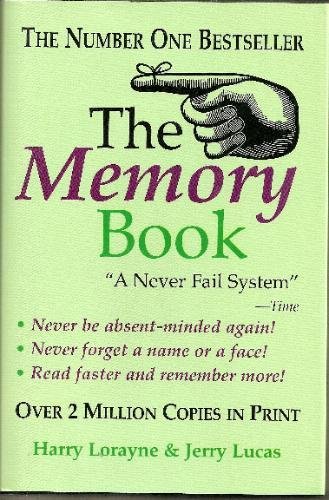
[P337.Ebook] Get Free Ebook The Memory Book, by Harry Lorayne, Jerry Lucas

Get Free Ebook The Memory Book, by Harry Lorayne, Jerry Lucas

Nevertheless, some people will certainly seek for the best vendor book to check out as the first referral. This is why; this The Memory Book, By Harry Lorayne, Jerry Lucas exists to satisfy your need. Some people like reading this book The Memory Book, By Harry Lorayne, Jerry Lucas as a result of this prominent book, but some love this as a result of preferred writer. Or, many additionally like reading this book The Memory Book, By Harry Lorayne, Jerry Lucas since they really need to read this book. It can be the one that really enjoy reading.

The Memory Book, by Harry Lorayne, Jerry Lucas

The Memory Book, by Harry Lorayne, Jerry Lucas


The Memory Book, by Harry Lorayne, Jerry Lucas

Get Free Ebook The Memory Book, by Harry Lorayne, Jerry Lucas

Do you believe that reading is an essential task? Discover your reasons adding is necessary. Reviewing a publication The Memory Book, By Harry Lorayne, Jerry Lucas is one part of pleasurable tasks that will make your life top quality better. It is not regarding just exactly what kind of e-book The Memory Book, By Harry Lorayne, Jerry Lucas you review, it is not just regarding the amount of books you review, it has to do with the behavior. Checking out behavior will certainly be a method to make book The Memory Book, By Harry Lorayne, Jerry Lucas as her or his close friend. It will certainly no issue if they invest money and also spend more publications to finish reading, so does this book The Memory Book, By Harry Lorayne, Jerry Lucas

Do you ever recognize guide The Memory Book, By Harry Lorayne, Jerry Lucas Yeah, this is an extremely intriguing book to read. As we informed previously, reading is not sort of commitment task to do when we have to obligate. Reviewing must be a behavior, an excellent practice. By reviewing The Memory Book, By Harry Lorayne, Jerry Lucas, you could open up the new globe as well as obtain the power from the globe. Every little thing could be gotten through guide The Memory Book, By Harry Lorayne, Jerry Lucas Well briefly, publication is quite effective. As just what we provide you here, this The Memory Book, By Harry Lorayne, Jerry Lucas is as one of checking out e-book for you.

By reading this book The Memory Book, By Harry Lorayne, Jerry Lucas, you will get the very best thing to get. The new point that you do not require to spend over money to get to is by doing it alone. So, just what should you do now? Visit the link web page and download and install the e-book The Memory Book, By Harry Lorayne, Jerry Lucas You can obtain this The Memory Book, By Harry Lorayne, Jerry Lucas by online. It's so simple, right? Nowadays, innovation really supports you activities, this on-line publication The Memory Book, By Harry Lorayne, Jerry Lucas, is as well.

Be the very first to download this e-book The Memory Book, By Harry Lorayne, Jerry Lucas as well as let reviewed by coating. It is really easy to read this publication The Memory Book, By Harry Lorayne, Jerry Lucas considering that you do not require to bring this printed The Memory Book, By Harry Lorayne, Jerry Lucas almost everywhere. Your soft documents book could be in our device or computer so you can enjoy checking out all over and every time if required. This is why lots varieties of people additionally read guides The Memory Book, By Harry Lorayne, Jerry Lucas in soft fie by downloading and install guide. So, be just one of them which take all advantages of reading the e-book The Memory Book, By Harry Lorayne, Jerry Lucas by on-line or on your soft data system.

The Memory Book, by Harry Lorayne, Jerry Lucas

Unleash the hidden power of your mind through Harry Lorayne and Jerry Lucas's simple, fail-safe memory system, and you can become more effective, more imaginative, and more powerful, at work, at school, in sports and play. Discover how easy it is to: file phone numbers, data, figures, and appointments right in your head; learn foreign words and phrases with ease; read with speed--and greater understanding; shine in the classroom--and shorten study hours; dominate social situations, and more.

  • Sales Rank: #646302 in Books
  • Published on: 1989-08
  • Original language: English
  • Number of items: 1
  • Binding: Hardcover
  • 237 pages
Features
  • Health & Fitness
  • Memory Training
  • Book

From the Publisher

While we were working on the covers of the repackaged mass market edition, I was intrigued
to see that one of the authors was an ex-New York Knick from one of the great championship
teams of my youth. I read Jerry Lucas's introduction with some curiosity and was hooked
immediately. I, too, had spent a great deal of my childhood inventing alphabetical and
numerical games. (As a result, I can still recite the phone numbers of a dozen or so elementary-school friends from thirty years ago!) I realized that I still used some of these tricks, but that there were even more ways I could use letters, numbers, and symbols to retain information. The techniques are interesting and ultimately fun. Oh, and let's not forget helpful.

Laurie Kahn, Associate Managing Editor

From the Inside Flap
Unleash the hidden power of your mind through Harry Lorayne and Jerry Lucas's simple, fail-safe memory system, and you can become more effective, more imaginative, and more powerful, at work, at school, in sports and play. Discover how easy it is to: file phone numbers, data, figures, and appointments right in your head; learn foreign words and phrases with ease; read with speed--and greater understanding; shine in the classroom--and shorten study hours; dominate social situations, and more.

Most helpful customer reviews

120 of 120 people found the following review helpful.
A life-long experience in a book to enhance memory
By Mr J.Consterdine
The book that makes you go through the experience of the author and how he learns to improve himself in the memorizing aspect is just mind blowing. Harry Lorayne has the experience of expanding his memorization potential over time and the techniques mentioned in here are also that he applied to his brain expansion. This book "The Memory Book: The Classic Guide to Improving Your Memory at Work, at School, and at Play" is just one of the phenomenal books if you are really serious in boosting up your memory.

Then when I searched for the book that not only make me increase my memory but in reality gives the control of my mind to me, I also came to know about this excellent book Maximizing Brain Control : Unleash The Genius In You. You can increase the memorization power with different tips and tricks but taking full control so that there remains no door unlocked for your memory to be enhanced, you can always go through this book to add up to your memorizing skills.

Harry Lorayne has proven himself to be the master at increasing mind's potential. The thing is that there is no way that you would master any trick overnight but with the techniques he share with you that he have used for all his life and have benefit from them up till today. It is your time to get on with learning the techniques and get the boost in your memory while you study, play or even when you are hanging out with friends. The only thing that would make your memory perfect is how much you dedicate yourself to them.

The author has taught with his experience that how he step by step mastered the techniques and how you can become proficient at them too so that you can get the grasp on your memory. This book is worth having especially if you are tired of looking around for memory improving books. Just commit yourself to the memory techniques present in here for you and get the success graph go through the roof.

5 of 5 people found the following review helpful.
An informal yet comprehensive guide to memory improvement
By Kenn Caesius
There is something incredible to be said about a book that has been continuously published a little over 40 years. When I borrowed the e-book version from the local library, I really was not expecting much because of its age but after reading the last page, I think you might agree with me that its perhaps the most informal yet informative guide about improving memory.

The Memory book is co-authored mnemonics guide written by Harry Lorayne and Jerry Lucas, both of whom have made a living by demonstrations of their prodigious memories - perhaps moreso Harry Lorayne - who was an irregular guest during the Johnny Carson era of the The Tonight Show. Initially published in 1974, the authors both converse and elaborate in an informal tone on both the history and techniques of not just improving memory but also distinct methods on particular matters as simple as remembering shopping lists to sports plays. Starting with a simple elaboration about the well-known image linking method of remembering lists, the authors build on with homonyms and codes that can be applied to almost anything that needs to learned.

I really enjoyed this book in several ways. The light and conversational tone forgoes the drier explanations about psychology with simple and effective details that will have you remembering things faster than you thought. While most of us have resigned ourselves to the brute force approach of repetition in remembering anything, those seeking alternative methods will be very interested in applying the techniques that the authors elaborate. In my case, the chapter on learning a second language has been an incredible guide to remembering vocabulary, moreso when it is something as alien as the Japanese language.

There is one passage that really stuck to me – In chapter 2 they were quick to declare that “virtually all learning is based on memory” and that while some educators might take offense to having their lessons simply “memorized”, the authors countered with an anecdote about the three steps of basic learning: 1) the search for information, 2) remembering the information, and 3) applying the information. By concentrating on the second step, everything else you want to know will coalesce around and finally you will be actually learning. While I seriously doubt the methods and exercises will turn you into stage act on par with Harry Lorayne, being able to remember names, faces, and the associated phone would be an impressive feat in this age of the omniscient contact lists.

3 of 3 people found the following review helpful.
Bad Memory? Buy This Very Useful Book
By Michael Buck
I first bought this book many years ago when I was first starting college. It was an incredible help -far beyond what I thought it would be. I saw Jerry Lucas on Johnny Carson one night. He had all of the people in the studio audience tell him their first and last names when they filed into the auditorium. There were about 400 people in the audience and when Jerry came on (which was about two hours later) he had everyone stand up. He pointed to them each and said their first and last name without an error. I bought the book the next day and have recommended it to many friends who have also benefited from the methods Jerry and Harry teach. It is not difficult, you just have to train your mind to use the tricks they tell you about. I still have my original paper book copy but it is a little tattered and the binding is falling apart so I bought the electronic copy. This is an exceptionally useful book that can help you in all aspects of life, whether it is remembering names, doing math in your head, or dozens of other tricks. Highly recommended as a necessary book.

See all 406 customer reviews...

The Memory Book, by Harry Lorayne, Jerry Lucas PDF
The Memory Book, by Harry Lorayne, Jerry Lucas EPub
The Memory Book, by Harry Lorayne, Jerry Lucas Doc
The Memory Book, by Harry Lorayne, Jerry Lucas iBooks
The Memory Book, by Harry Lorayne, Jerry Lucas rtf
The Memory Book, by Harry Lorayne, Jerry Lucas Mobipocket
The Memory Book, by Harry Lorayne, Jerry Lucas Kindle

The Memory Book, by Harry Lorayne, Jerry Lucas PDF

The Memory Book, by Harry Lorayne, Jerry Lucas PDF

The Memory Book, by Harry Lorayne, Jerry Lucas PDF

Minggu, 09 September 2012

[T709.Ebook] Get Free Ebook His Robot Wife, by Wesley Allison

Get Free Ebook His Robot Wife, by Wesley Allison

When you are hurried of job deadline and have no idea to obtain inspiration, His Robot Wife, By Wesley Allison publication is among your solutions to take. Schedule His Robot Wife, By Wesley Allison will provide you the best resource as well as point to get inspirations. It is not only concerning the works for politic business, administration, economics, and various other. Some bought tasks to make some fiction your jobs also need inspirations to overcome the task. As just what you need, this His Robot Wife, By Wesley Allison will probably be your choice.

His Robot Wife, by Wesley Allison

His Robot Wife, by Wesley Allison


His Robot Wife, by Wesley Allison

Get Free Ebook His Robot Wife, by Wesley Allison

His Robot Wife, By Wesley Allison How an easy idea by reading can boost you to be an effective individual? Reading His Robot Wife, By Wesley Allison is a very basic task. But, how can many individuals be so careless to read? They will like to invest their downtime to talking or socializing. When actually, checking out His Robot Wife, By Wesley Allison will certainly give you much more possibilities to be successful finished with the efforts.

It can be one of your morning readings His Robot Wife, By Wesley Allison This is a soft data book that can be survived downloading from on the internet publication. As known, in this sophisticated age, modern technology will certainly alleviate you in doing some activities. Even it is simply checking out the visibility of publication soft file of His Robot Wife, By Wesley Allison can be additional attribute to open. It is not only to open and also save in the gizmo. This time in the early morning and also other spare time are to review the book His Robot Wife, By Wesley Allison

The book His Robot Wife, By Wesley Allison will consistently offer you positive worth if you do it well. Finishing guide His Robot Wife, By Wesley Allison to read will not become the only objective. The goal is by obtaining the positive value from the book up until completion of guide. This is why; you need to learn even more while reading this His Robot Wife, By Wesley Allison This is not just just how fast you check out a book as well as not only has the number of you finished guides; it is about exactly what you have actually gotten from the books.

Taking into consideration the book His Robot Wife, By Wesley Allison to check out is also needed. You can choose the book based on the favourite motifs that you such as. It will certainly engage you to like reviewing various other books His Robot Wife, By Wesley Allison It can be likewise about the need that obligates you to read guide. As this His Robot Wife, By Wesley Allison, you can discover it as your reading publication, also your favourite reading publication. So, find your preferred publication right here as well as obtain the connect to download the book soft documents.

His Robot Wife, by Wesley Allison

Five years ago, Mike Smith was an unhappy man living all alone. Then he purchased a Daffodil. Far more than regular robots, his Daffodil Patience, changed his life in ways that he had never thought possible. Now it is the year 2037, and Mike and Patience have been married for five years. Retired and enjoying life, Mike thought that all his troubles were behind him, but it seems as though they are creeping up again. California Proposition 22 proposes to define a person as a biological entity, thereby annulling marriages, like Mike’s and Patience’s, performed in other states. Battle lines have been drawn, at least as far as the proponents of the bill are concerned. Now Mike must muster his own support to defeat the measure. But there is more going on than just politics. Daffodil, the robot maker, is in the news again. Hardware issues are leaving robots across the globe unable to function. Is it only an antenna issue? Now Patience herself is behaving oddly. Is there something really wrong with her, or does she just need a software upgrade?

  • Sales Rank: #557009 in eBooks
  • Published on: 2011-02-13
  • Released on: 2011-02-13
  • Format: Kindle eBook

Most helpful customer reviews

5 of 6 people found the following review helpful.
Patience
By Kindle97
I had just purchased a Ipad, and decided to look at some ibooks. The first book His Robot Girlfriend was free. I was very drawn into the story and liked it so much that I purchased the second book His Robot Wife, and as with the first book, I could not put it down. Now some people are harsh in judging this author, but in my opinion, his book is not bad at all. If your looking for a book about Robots/Machines taking over the world. Sorry these are not the books for you. I am so burned out on Matrix, Terminator, Judgment day, type stories. These two books were a breath of fresh air for a change. I hope there will be a third book. So if you have a Kindle or an Ipad give these two books a look.

1 of 1 people found the following review helpful.
Looking forward to more of Patience and Mike
By Douglas H.
His Robot Wife picks up a few years after Mike purchased his humanoid robot Patience and married her in the only state that allows robot/human unions. The first story also revealed that some of the Amonte series robots have free will allowing them to disobey their programming under certain circumstances. In this novella, Patience's behavior is becoming more human-like and independent. Suddenly, the Daffodil Corporation is insisting that Patience upgrade to the latest version of the bio software, claiming that her odd behavior is a known glitch in older model Amontes and that the upgrade will "fix" her. For some reason, Patience is refusing the upgrade. Adding to the couple's troubles, California is about to vote on a referendum which would revoke the state's recognition of robot/human marriages.

Once again, author Wesley Allison uses a "slice of life style" in which seemingly not much happens. Actually, quite a bit does. Mike's view of Patience: sometimes he considers her a sentient being that he loved enough to marry and at other times she is just a super sex doll to him. Society is having trouble dealing with the concept of humans having relationships with machines; with some people accepting it as they would gay or interracial marriage while others consider the idea an abomination. The world Mike and Patience inhabit is not very different from our own, with the exception of the humanoid robots and some other gadgets. Tablets have replaced desktop and laptop PCs and all cars seem to be hydrogen fueled. Global warming has gotten much worse, but otherwise, the politics and motivations of humans is pretty much the same. This time around, the author has toned down his enthusiasm for describing Patience's never ending supply of fetish/slut wear!

I enjoyed this book. Be warned that it is a novella and is a quick read. The Prop 22 issue is resolved too quickly as is the problem of the Daffodil Corporation's software updates. Or are they? Looking forward to the next book.

1 of 1 people found the following review helpful.
Tangible fantasy
By D. Ricks
A fun fantasy. A return to the climate changed, robot-filled near future California of previous titles. The domestic sex robots are (of course) dangerously strong, as is assumed for the genre. The author's slice of life style shines in this piece, as the plucky housewife bot takes on a protege and goes on a cruise to temperate Antarctica. The nearness of this future and the domestic approach taken by the author seems to make the fantasy of perfect robot companions more tangible. Yet not every robot is perfect; their flaws take a surprisingly human turn.

See all 31 customer reviews...

His Robot Wife, by Wesley Allison PDF
His Robot Wife, by Wesley Allison EPub
His Robot Wife, by Wesley Allison Doc
His Robot Wife, by Wesley Allison iBooks
His Robot Wife, by Wesley Allison rtf
His Robot Wife, by Wesley Allison Mobipocket
His Robot Wife, by Wesley Allison Kindle

His Robot Wife, by Wesley Allison PDF

His Robot Wife, by Wesley Allison PDF

His Robot Wife, by Wesley Allison PDF

Sabtu, 08 September 2012

[T852.Ebook] Fee Download Building a Pentesting Lab for Wireless Networks, by Vyacheslav Fadyushin, Andrey Popov

Fee Download Building a Pentesting Lab for Wireless Networks, by Vyacheslav Fadyushin, Andrey Popov

Building A Pentesting Lab For Wireless Networks, By Vyacheslav Fadyushin, Andrey Popov. Modification your practice to hang or waste the moment to only chat with your buddies. It is done by your everyday, don't you really feel bored? Now, we will show you the new habit that, really it's an older routine to do that can make your life much more certified. When really feeling burnt out of constantly talking with your buddies all spare time, you can discover guide qualify Building A Pentesting Lab For Wireless Networks, By Vyacheslav Fadyushin, Andrey Popov and after that review it.

Building a Pentesting Lab for Wireless Networks, by Vyacheslav Fadyushin, Andrey Popov

Building a Pentesting Lab for Wireless Networks, by Vyacheslav Fadyushin, Andrey Popov


Building a Pentesting Lab for Wireless Networks, by Vyacheslav Fadyushin, Andrey Popov

Fee Download Building a Pentesting Lab for Wireless Networks, by Vyacheslav Fadyushin, Andrey Popov

Building A Pentesting Lab For Wireless Networks, By Vyacheslav Fadyushin, Andrey Popov. It is the moment to improve and also freshen your ability, knowledge as well as experience included some amusement for you after long time with monotone things. Operating in the office, going to research, picking up from exam and even more tasks might be completed and you should begin new points. If you feel so tired, why do not you try new point? A quite simple thing? Checking out Building A Pentesting Lab For Wireless Networks, By Vyacheslav Fadyushin, Andrey Popov is just what our company offer to you will know. As well as the book with the title Building A Pentesting Lab For Wireless Networks, By Vyacheslav Fadyushin, Andrey Popov is the recommendation currently.

As one of the window to open up the new globe, this Building A Pentesting Lab For Wireless Networks, By Vyacheslav Fadyushin, Andrey Popov supplies its incredible writing from the author. Published in one of the popular authors, this publication Building A Pentesting Lab For Wireless Networks, By Vyacheslav Fadyushin, Andrey Popov becomes one of one of the most desired books just recently. In fact, the book will certainly not matter if that Building A Pentesting Lab For Wireless Networks, By Vyacheslav Fadyushin, Andrey Popov is a best seller or otherwise. Every book will always offer best resources to get the visitor all finest.

Nevertheless, some individuals will seek for the best vendor book to read as the very first reference. This is why; this Building A Pentesting Lab For Wireless Networks, By Vyacheslav Fadyushin, Andrey Popov is presented to fulfil your necessity. Some individuals like reading this book Building A Pentesting Lab For Wireless Networks, By Vyacheslav Fadyushin, Andrey Popov as a result of this prominent publication, however some love this due to favourite writer. Or, many also like reading this publication Building A Pentesting Lab For Wireless Networks, By Vyacheslav Fadyushin, Andrey Popov considering that they really need to read this book. It can be the one that really like reading.

In getting this Building A Pentesting Lab For Wireless Networks, By Vyacheslav Fadyushin, Andrey Popov, you may not consistently pass walking or using your motors to guide shops. Obtain the queuing, under the rain or hot light, as well as still look for the unidentified publication to be in that publication establishment. By visiting this page, you can just look for the Building A Pentesting Lab For Wireless Networks, By Vyacheslav Fadyushin, Andrey Popov and also you can find it. So currently, this time is for you to choose the download web link and purchase Building A Pentesting Lab For Wireless Networks, By Vyacheslav Fadyushin, Andrey Popov as your own soft documents book. You could read this book Building A Pentesting Lab For Wireless Networks, By Vyacheslav Fadyushin, Andrey Popov in soft file only as well as save it as all yours. So, you do not have to hurriedly put guide Building A Pentesting Lab For Wireless Networks, By Vyacheslav Fadyushin, Andrey Popov right into your bag anywhere.

Building a Pentesting Lab for Wireless Networks, by Vyacheslav Fadyushin, Andrey Popov

Key Features

  • Design and build an extendable penetration testing lab with wireless access suitable for home and enterprise use
  • Fill the lab with various components and customize them according to your own needs and skill level
  • Secure your lab from unauthorized access and external attacks
Book Description

Starting with the basics of wireless networking and its associated risks, we will guide you through the stages of creating a penetration testing lab with wireless access and preparing your wireless penetration testing machine.

This book will guide you through configuring hardware and virtual network devices, filling the lab network with applications and security solutions, and making it look and work like a real enterprise network. The resulting lab protected with WPA-Enterprise will let you practice most of the attack techniques used in penetration testing projects. Along with a review of penetration testing frameworks, this book is also a detailed manual on preparing a platform for wireless penetration testing. By the end of this book, you will be at the point when you can practice, and research without worrying about your lab environment for every task.

What you will learn
  • Determine your needs and choose the appropriate lab components for them
  • Build a virtual or hardware lab network
  • Imitate an enterprise network and prepare intentionally vulnerable software and services
  • Secure wired and wireless access to your lab
  • Choose a penetration testing framework according to your needs
  • Arm your own wireless hacking platform
  • Get to know the methods to create a strong defense mechanism for your system
About the Author

Vyacheslav Fadyushin (CISA, CEH, PCI ASV) is a security consultant and a penetration tester with more than 9 years of professional experience and a diverse background in various aspects of information security.

His main points of interest and fields of expertise are ethical hacking and penetration testing, infrastructure and application security, mobile security, and information security management.

He is also an author of the book, Penetration Testing: Setting Up a Test Lab How-to, published by Packt Publishing in 2013.

Andrey Popov is a security consultant and penetration tester with rich professional experience and a diverse background in infrastructure and application security, information security management, and ethical hacking. He has been working for a market-leading company along with another security professional since 2007.

Table of Contents
  • Understanding Wireless Network Security and Risks
  • Planning Your Lab Environment
  • Configuring Networking Lab Components
  • Designing Application Lab Components
  • Implementing Security
  • Exploring Hacking Toolkits
  • Preparing a Wireless Penetration Testing Platform
  • What's Next?
    • Sales Rank: #1052578 in Books
    • Published on: 2016-03-28
    • Released on: 2016-03-28
    • Original language: English
    • Dimensions: 9.25" h x .60" w x 7.50" l, 1.01 pounds
    • Binding: Paperback
    • 264 pages

    About the Author

    Vyacheslav Fadyushin

    Vyacheslav Fadyushin (CISA, CEH, PCI ASV) is a security consultant and a penetration tester with more than 9 years of professional experience and a diverse background in various aspects of information security. His main points of interest and fields of expertise are ethical hacking and penetration testing, infrastructure and application security, mobile security, and information security management. He is also an author of the book, Penetration Testing: Setting Up a Test Lab How-to, published by Packt Publishing in 2013.


    Andrey Popov

    Andrey Popov is a security consultant and penetration tester with rich professional experience and a diverse background in infrastructure and application security, information security management, and ethical hacking. He has been working for a market-leading company along with another security professional since 2007.

    Most helpful customer reviews

    See all customer reviews...

    Building a Pentesting Lab for Wireless Networks, by Vyacheslav Fadyushin, Andrey Popov PDF
    Building a Pentesting Lab for Wireless Networks, by Vyacheslav Fadyushin, Andrey Popov EPub
    Building a Pentesting Lab for Wireless Networks, by Vyacheslav Fadyushin, Andrey Popov Doc
    Building a Pentesting Lab for Wireless Networks, by Vyacheslav Fadyushin, Andrey Popov iBooks
    Building a Pentesting Lab for Wireless Networks, by Vyacheslav Fadyushin, Andrey Popov rtf
    Building a Pentesting Lab for Wireless Networks, by Vyacheslav Fadyushin, Andrey Popov Mobipocket
    Building a Pentesting Lab for Wireless Networks, by Vyacheslav Fadyushin, Andrey Popov Kindle

    Building a Pentesting Lab for Wireless Networks, by Vyacheslav Fadyushin, Andrey Popov PDF

    Building a Pentesting Lab for Wireless Networks, by Vyacheslav Fadyushin, Andrey Popov PDF

    Building a Pentesting Lab for Wireless Networks, by Vyacheslav Fadyushin, Andrey Popov PDF
    Building a Pentesting Lab for Wireless Networks, by Vyacheslav Fadyushin, Andrey Popov PDF

    [W341.Ebook] Fee Download In Order to Live, by Yeonmi Park

    Fee Download In Order to Live, by Yeonmi Park

    This is why we advise you to always visit this resource when you need such book In Order To Live, By Yeonmi Park, every book. By online, you might not getting guide shop in your city. By this on the internet collection, you could find guide that you really intend to read after for very long time. This In Order To Live, By Yeonmi Park, as one of the recommended readings, has the tendency to be in soft data, as all book collections right here. So, you may additionally not wait for couple of days later to get as well as check out the book In Order To Live, By Yeonmi Park.

    In Order to Live, by Yeonmi Park

    In Order to Live, by Yeonmi Park


    In Order to Live, by Yeonmi Park

    Fee Download In Order to Live, by Yeonmi Park

    In Order To Live, By Yeonmi Park. Join with us to be participant below. This is the internet site that will certainly provide you reduce of browsing book In Order To Live, By Yeonmi Park to review. This is not as the various other site; the books will be in the kinds of soft file. What advantages of you to be participant of this site? Get hundred compilations of book link to download and also get consistently upgraded book everyday. As one of guides we will present to you now is the In Order To Live, By Yeonmi Park that has a very completely satisfied idea.

    Just how can? Do you think that you don't need adequate time to choose shopping book In Order To Live, By Yeonmi Park Never mind! Simply rest on your seat. Open your device or computer system and also be on-line. You can open up or see the web link download that we provided to get this In Order To Live, By Yeonmi Park By through this, you can obtain the online e-book In Order To Live, By Yeonmi Park Checking out guide In Order To Live, By Yeonmi Park by on-line can be truly done easily by saving it in your computer system as well as gadget. So, you can proceed every time you have cost-free time.

    Reading the e-book In Order To Live, By Yeonmi Park by on-line could be additionally done easily every where you are. It seems that hesitating the bus on the shelter, hesitating the checklist for line up, or other locations possible. This In Order To Live, By Yeonmi Park can accompany you because time. It will not make you feel bored. Besides, in this manner will likewise enhance your life high quality.

    So, merely be below, locate guide In Order To Live, By Yeonmi Park now as well as review that quickly. Be the very first to review this publication In Order To Live, By Yeonmi Park by downloading and install in the link. We have other e-books to check out in this web site. So, you could find them also easily. Well, now we have done to offer you the finest e-book to review today, this In Order To Live, By Yeonmi Park is actually proper for you. Never ever neglect that you need this e-book In Order To Live, By Yeonmi Park to make far better life. On the internet e-book In Order To Live, By Yeonmi Park will truly offer very easy of everything to read as well as take the benefits.

    In Order to Live, by Yeonmi Park

    Yeonmi Park was not dreaming of freedom when she escaped from North Korea. She didn t even know what it meant to be free. All she knew was that she was running for her life, that if she and her family stayed behind they would die from starvation, or disease, or even execution.

    "In Order to Live" is the story of Park s struggle to survive in the darkest, most repressive country on earth; her harrowing escape to South Korea through China s underworld of smugglers and human traffickers; and her emergence as a leading human rights activist all before her twenty-first birthday.

    Park was born to a family of civil servants in the North Korean city of Hyesan, along the Chinese border. She grew up in a society in which the regime controls everything you do, everything you learn, where you go, what you say, even what you think. In this warped world, famine was a way of life and minor offenses, such as watching foreign videos, could prove fatal.

    Park s family was relatively privileged until her father, a party member, was arrested for smuggling. After that, life in North Korea became a ceaseless battle against starvation. Escaping with her mother, Park began a long journey of unspeakable hardship and degradation through China and Mongolia, which finally yielded her freedom in South Korea. Today Park is an influential leader of the younger generations of Korean dissidents and an internationally recognized advocate for human rights around the world.

    In the end, "In Order to Live" is about the resilience of the human spirit and the transcendent power of love to overcome the most ghastly horrors and the most hopeless circumstances. I had to learn how to love others, says Yeonmi Park. And now I am willing to die for them.

    "

    • Sales Rank: #4840519 in Books
    • Brand: imusti
    • Published on: 2016-07-07
    • Original language: English
    • Number of items: 1
    • Dimensions: 7.80" h x .71" w x 5.08" l, .70 pounds
    • Binding: Paperback
    Features
    • PENGUIN GROUP

    About the Author
    Yeonmi Park is a human rights activist who was born in North Korea.

    Excerpt. � Reprinted by permission. All rights reserved.

    Visit http://bit.ly/1KfF28h for a larger version of this map.

    Prologue

    On the cold, black night of March 31, 2007, my mother and I scrambled down the steep, rocky bank of the frozen Yalu River that divides North Korea and China. There were patrols above us and below, and guard posts one hundred yards on either side of us manned by soldiers ready to shoot anyone attempting to cross the border. We had no idea what would come next, but we were desperate to get to China, where there might be a chance to survive.

    I was thirteen years old and weighed only sixty pounds. Just a week earlier, I’d been in a hospital in my hometown of Hyesan along the Chinese border, suffering from a severe intestinal infection that the doctors had mistakenly diagnosed as appendicitis. I was still in terrible pain from the incision, and was so weak I could barely walk.

    The young North Korean smuggler who was guiding us across the border insisted we had to go that night. He had paid some guards to look the other way, but he couldn’t bribe all the soldiers in the area, so we had to be extremely cautious. I followed him in the darkness, but I was so unsteady that I had to scoot down the bank on my bottom, sending small avalanches of rocks crashing ahead of me. He turned and whispered angrily for me to stop making so much noise. But it was too late. We could see the silhouette of a North Korean soldier climbing up from the riverbed. If this was one of the bribed border guards, he didn’t seem to recognize us.

    “Go back!” the soldier shouted. “Get out of here!”

    Our guide scrambled down to meet him and we could hear them talking in hushed voices. Our guide returned alone.

    “Let’s go,” he said. “Hurry!”

    It was early spring, and the weather was getting warmer, melting patches of the frozen river. The place where we crossed was steep and narrow, protected from the sun during the day so it was still solid enough to hold our weight—we hoped. Our guide made a cell phone call to someone on the other side, the Chinese side, and then whispered, “Run!”

    The guide started running, but my feet would not move and I clung to my mother. I was so scared that I was completely paralyzed. The guide ran back for us, grabbed my hands, and dragged me across the ice. When we reached solid ground, we started running and didn’t stop until we were out of sight of the border guards.

    The riverbank was dark, but the lights of Chaingbai, China, glowed just ahead of us. I turned to take a quick glance back at the place where I was born. The electric power grid was down, as usual, and all I could see was a black, lifeless horizon. I felt my heart pounding out of my chest as we arrived at a small shack on the edge of some flat, vacant fields.

    I wasn’t dreaming of freedom when I escaped from North Korea. I didn’t even know what it meant to be free. All I knew was that if my family stayed behind, we would probably die—from starvation, from disease, from the inhuman conditions of a prison labor camp. The hunger had become unbearable; I was willing to risk my life for the promise of a bowl of rice.

    But there was more to our journey than our own survival. My mother and I were searching for my older sister, Eunmi, who had left for China a few days earlier and had not been heard from since. We hoped that she would be there waiting for us when we crossed the river. Instead the only person to greet us was a bald, middle-aged Chinese man, an ethnic North Korean like many of the people living in this border area. The man said something to my mother, and then led her around the side of the building. From where I waited I could hear my mother pleading, “Aniyo! Aniyo!” No! No!

    I knew then that something was terribly wrong. We had come to a bad place, maybe even worse than the one we had left.

    •���•���•

    I am most grateful for two things: that I was born in North Korea, and that I escaped from North Korea. Both of these events shaped me, and I would not trade them for an ordinary and peaceful life. But there is more to the story of how I became who I am today.

    Like tens of thousands of other North Koreans, I escaped my homeland and settled in South Korea, where we are still considered citizens, as if a sealed border and nearly seventy years of conflict and tension never divided us. North and South Koreans have the same ethnic backgrounds, and we speak the same language—except in the North there are no words for things like “shopping malls,” “liberty,” or even “love,” at least as the rest of the world knows it. The only true “love” we can express is worship for the Kims, a dynasty of dictators who have ruled North Korea for three generations. The regime blocks all outside information, all videos and movies, and jams radio signals. There is no World Wide Web and no Wikipedia. The only books are filled with propaganda telling us that we live in the greatest country in the world, even though at least half of North Koreans live in extreme poverty and many are chronically malnourished. My former country doesn’t even call itself North Korea—it claims to be Chosun, the true Korea, a perfect socialist paradise where 25 million people live only to serve the Supreme Leader, Kim Jong Un. Many of us who have escaped call ourselves “defectors” because by refusing to accept our fate and die for the Leader, we have deserted our duty. The regime calls us traitors. If I tried to return, I would be executed.

    The information blockade works both ways: not only does the government attempt to keep all foreign media from reaching its people, it also prevents outsiders from learning the truth about North Korea. The regime is known as the Hermit Kingdom because it tries to make itself unknowable. Only those of us who have escaped can describe what really goes on behind the sealed borders. But until recently, our stories were seldom heard.

    I arrived in South Korea in the spring of 2009, a fifteen-year-old with no money and the equivalent of two years of primary school. Five years later, I was a sophomore at a top university in Seoul, a police administration major with a growing awareness of the burning need for justice in the land where I was born.

    I have told the story of my escape from North Korea many times, in many forums. I have described how human traffickers tricked my mother and me into following them to China, where my mother protected me and sacrificed herself to be raped by the broker who had targeted me. Once in China, we continued to look for my sister, without success. My father crossed the border to join us in our search, but he died of untreated cancer a few months later. In 2009, my mother and I were rescued by Christian missionaries, who led us to the Mongolian border with China. From there we walked through the frigid Gobi Desert one endless winter night, following the stars to freedom.

    All this is true, but it is not the whole story.

    Before now, only my mother knew what really happened in the two years that passed between the night we crossed the Yalu River into China and the day we arrived in South Korea to begin a new life. I told almost nothing of my story to the other defectors and human rights advocates I met in South Korea. I believed that, somehow, if I refused to acknowledge the unspeakable past, it would disappear. I convinced myself that a lot of it never happened; I taught myself to forget the rest.

    But as I began to write this book, I realized that without the whole truth my life would have no power, no real meaning. With the help of my mother, the memories of our lives in North Korea and China came back to me like scenes from a forgotten nightmare. Some of the images reappeared with a terrible clarity; others were hazy, or scrambled like a deck of cards spilled on the floor. The process of writing has been the process of remembering, and of trying to make sense out of those memories.

    Along with writing, reading has helped me order my world. As soon as I arrived in South Korea and could get my hands on translations of the world’s great books, I began devouring them. Later I was able to read them in English. And as I began to write my own book, I came across a famous line by Joan Didion, “We tell ourselves stories in order to live.” Even though the writer and I come from such different cultures, I feel the truth of those words echoing inside me. I understand that sometimes the only way we can survive our own memories is to shape them into a story that makes sense out of events that seem inexplicable.

    Along my journey I have seen the horrors that humans can inflict on one another, but I’ve also witnessed acts of tenderness and kindness and sacrifice in the worst imaginable circumstances. I know that it is possible to lose part of your humanity in order to survive. But I also know that the spark of human dignity is never completely extinguished, and that given the oxygen of freedom and the power of love, it can grow again.

    This is my story of the choices I made in order to live.

    PART ONE

    North Korea

    One

    Even the Birds and Mice Can Hear You Whisper

    The Yalu River winds like the tail of a dragon between China and North Korea on its way to the Yellow Sea. At Hyesan it opens into a valley in the Paektu Mountains, where the city of 200,000 sprawls between rolling hills and a high plateau covered with fields, patches of trees, and graves. The river, usually shallow and tame, is frozen solid during winter, which lasts the better part of the year. This is the coldest part of North Korea, with temperatures sometimes plunging to minus-40 degrees Fahrenheit. Only the toughest survive.

    To me, Hyesan was home.

    Just across the river is the Chinese city of Chaingbai, which has a large population of ethnic Koreans. Families on both sides of the border have been trading with one another for generations. As a child I would often stand in the darkness and stare across the river at the lights of Chaingbai, wondering what was going on beyond my city’s limits. It was exciting to watch the colorful fireworks explode in the velvet black sky during festivals and Chinese New Year. We never had such things on our side of the border. Sometimes, when I walked down to the river to fill my buckets with water and the damp wind was blowing just right, I could actually smell delicious food, oily noodles and dumplings cooking in the kitchens on the other side. The same wind carried the voices of the Chinese children who were playing on the opposite bank.

    “Hey, you! Are you hungry over there?” the boys shouted in Korean.

    “No! Shut up, you fat Chinese!” I shouted back.

    This wasn’t true. In fact, I was very hungry, but there was no use in talking about it.

    •���•���•

    I came into this world too soon.

    My mother was only seven months pregnant when she went into labor, and when I was born on October 4, 1993, I weighed less than three pounds. The doctor at the hospital in Hyesan told my mother that I was so small there wasn’t anything they could do for me. “She might live or she might die,” he said. “We don’t know.” It was up to me to live.

    No matter how many blankets my mother wrapped around me, she couldn’t keep me warm. So she heated up a stone and put it in the blanket with me, and that’s how I survived. A few days later, my parents brought me home, and waited.

    My sister, Eunmi, had been born two years earlier, and this time my father, Park Jin Sik, was hoping for a son. In patriarchal North Korea, it was the male line that really mattered. However, he quickly recovered from his disappointment. Most of the time it’s the mother who makes the strongest bond with a baby, but my father was the one who could soothe me when I was crying. It was in my father’s arms that I felt protected and cherished. Both my mother and my father encouraged me, from the start, to be proud of who I am.

    •���•���•

    When I was very young, we lived in a one-story house perched on a hill above the railroad tracks that curved like a rusty spine through the city.

    Our house was small and drafty, and because we shared a wall with a neighbor we could always hear what was going on next door. We could also hear mice squeaking and skittering around in the ceiling at night. But it was paradise to me because we were there together as a family.

    My first memories are of the dark and the cold. During the winter months, the most popular place in our house was a small fireplace that burned wood or coal or whatever we could find. We cooked on top of the fire, and there were channels running under the cement floor to carry the smoke to a wooden chimney on the other side of the house. This traditional heating system was supposed to keep the room warm, but it was no match for the icy nights. At the end of the day, my mother would spread a thick blanket out next to the fire and we would all climb under the covers—first my mother, then me, then my sister, and my father on the end, in the coldest spot. Once the sun went down, you couldn’t see anything at all. In our part of North Korea, it was normal to go for weeks and even months without any electricity, and candles were very expensive. So we played games in the dark. Sometimes under the covers we would tease each other.

    “Whose foot is this?” my mother would say, poking with her toe.

    “It’s mine, it’s mine!” Eunmi would cry.

    On winter evenings and mornings, and even in summertime, everywhere we looked we could see smoke coming from the chimneys of Hyesan. Our neighborhood was very cozy and small, and we knew everyone who lived there. If smoke was not coming out of someone’s house, we’d go knock on the door to check if everything was okay.

    The unpaved lanes between houses were too narrow for cars, although this wasn’t much of a problem because there were so few cars. People in our neighborhood got around on foot, or for the few who could afford one, on bicycle or motorbike. The paths would turn slippery with mud after a rain, and that was the best time for the neighborhood kids to play our favorite chasing game. But I was smaller and slower than the other children my age and always had a hard time fitting in and keeping up.

    When I started school, Eunmi sometimes had to fight the older kids to defend me. She wasn’t very big, either, but she was smart and quick. She was my protector and playmate. When it snowed, she carried me up the hills around our neighborhood, put me in her lap, and wrapped her arms around me. I held on tight as we slid back down on our bottoms, screaming and laughing. I was just happy to be part of her world.

    In the summer, all the kids went down to play in the Yalu River, but I never learned how to swim. I just sat on the bank while the others paddled out into the current. Sometimes my sister or my best friend, Yong Ja, would see me by myself and bring me some pretty rocks they’d found in the deep river. And sometimes they held me in their arms and carried me a little way into the water before bringing me back to shore.

    Yong Ja and I were the same age, and we lived in the same part of town. I liked her because we were both good at using our imaginations to create our own toys. You could find a few manufactured dolls and other toys in the market, but they were usually too expensive. Instead we made little bowls and animals out of mud, and sometimes even miniature tanks; homemade military toys were very big in North Korea. But we girls were obsessed with paper dolls and spent hours cutting them out of thick paper, making dresses and scarves for them out of scraps.

    Sometimes my mother made pinwheels for us, and we would fasten them on to the metal footbridge above the railroad we called the Cloud Bridge. Years later, when life was much harder and more complicated, I would pass by that bridge and think of how happy it made us to watch those pinwheels spin in the open breeze.

    •���•���•

    When I was young, I didn’t hear the background noise of mechanical sounds like I do now in South Korea and the United States. There weren’t garbage trucks churning, horns honking, or phones ringing everywhere. All I could hear were the sounds people were making: women washing dishes, mothers calling their children, the clink of spoons and chopsticks on rice bowls as families sat down to eat. Sometimes I could hear my friends being scolded by their parents. There was no music blaring in the background, no eyes glued to smartphones back then. But there was human intimacy and connection, something that is hard to find in the modern world I inhabit today.

    At our house in Hyesan, our water pipes were almost always dry, so my mother usually carried our clothes down to the river and washed them there. When she brought them back, she put them on the warm floor to dry.

    Because electricity was so rare in our neighborhood, whenever the lights came on people were so happy they would sing and clap and shout. Even in the middle of the night, we would wake up to celebrate. When you have so little, just the smallest thing can make you happy—and that is one of the very few features of life in North Korea that I actually miss. Of course, the lights would never stay on for long. When they flickered off, we just said, “Oh, well,” and went back to sleep.

    Even when the electricity came on the power was very low, so many families had a voltage booster to help run the appliances. These machines were always catching on fire, and one March night it happened at our house while my parents were out. I was just a baby, and all I remember is waking up and crying while someone carried me through the smoke and flames. I don’t know if it was my sister or our neighbor who saved me. My mother came running when someone told her about the blaze, but my sister and I were both already safe in the neighbor’s house. Our home was destroyed by the fire, but right away my father rebuilt it with his own hands.

    After that, we planted a garden in our small fenced yard. My mother and sister weren’t interested in gardening, but my father and I loved it. We put in squash and cabbage and cucumbers and sunflowers. My father also planted beautiful fuchsia flowers we called “ear drops” along the fence. I adored draping the long delicate blossoms from my ears and pretending they were earrings. My mother asked my father why he was wasting valuable space planting flowers, but he ignored her.

    In North Korea, people lived close to nature, and they developed skills to predict the next day’s weather. We didn’t have the Internet and usually couldn’t watch the government’s broadcast on television because of the electricity shortage. So we had to figure it out ourselves.

    During the long summer nights, our neighbors would all sit around outside their houses in the evening air. There were no chairs; we just sat on the ground, looking at the sky. If we saw millions of stars up there, someone would remark, “Tomorrow will be a sunny day.” And we’d all murmur agreement. If there were only thousands of stars, someone else might say, “Looks like tomorrow will be cloudy.” That was our local forecast.

    The best day of every month was Noodle Day, when my mother bought fresh, moist noodles that were made in a machine in town. We wanted them to last a long time, so we spread them out on the warm kitchen floor to dry. It was like a holiday for my sister and me because we would get to sneak a few noodles and eat them while they were still soft and sweet. In the earliest years of my life, before the worst of the famine that struck North Korea in the mid-1990s had gripped our city, our friends would come around and we would share the noodles with them. In North Korea, you are supposed to share everything. But later, when times were much harder for our family and for the country, my mother told us to chase the children away. We couldn’t afford to share anything.

    During the good times, a family meal would consist of rice, kimchi, some kind of beans, and seaweed soup. But those things were too expensive to eat during the lean times. Sometimes we would skip meals, and often all we had to eat was a thin porridge of wheat or barley, beans, or black frozen potatoes ground and made into cakes filled with cabbage.

    •���•���•

    The country I grew up in was not like the one my parents had known as children in the 1960s and 1970s. When they were young, the state took care of everyone’s basic needs: clothes, medical care, food. After the Cold War ended, the Communist countries that had been propping up the North Korean regime all but abandoned it, and our state-controlled economy collapsed. North Koreans were suddenly on their own.

    I was too young to realize how desperate things were becoming in the grown-up world, as my family tried to adapt to the massive changes in North Korea during the 1990s. After my sister and I were asleep, my parents would sometimes lie awake, sick with worry, wondering what they could do to keep us all from starving to death.

    Anything I did overhear, I learned quickly not to repeat. I was taught never to express my opinion, never to question anything. I was taught to simply follow what the government told me to do or say or think. I actually believed that our Dear Leader, Kim Jong Il, could read my mind, and I would be punished for my bad thoughts. And if he didn’t hear me, spies were everywhere, listening at the windows and watching in the school yard. We all belonged to inminban, or neighborhood “people’s units,” and we were ordered to inform on anyone who said the wrong thing. We lived in fear, and almost everyone—my mother included—had a personal experience that demonstrated the dangers of talking.

    I was only nine months old when Kim Il Sung died on July 8, 1994. North Koreans worshipped the eighty-two-year-old “Great Leader.” At the time of his death, Kim Il Sung had ruled North Korea with an iron grip for almost five decades, and true believers—my mother included—thought that Kim Il Sung was actually immortal. His passing was a time of passionate mourning, and also uncertainty in the country. The Great Leader’s son, Kim Jong Il, had already been chosen to succeed his father, but the huge void Kim Il Sung left behind had everyone on edge.

    My mother strapped me on her back to join the thousands of mourners who daily flocked to the plaza-like Kim Il Sung monument in Hyesan to weep and wail for the fallen Leader during the official mourning period. The mourners left offerings of flowers and cups of rice liquor to show their adoration and grief.

    During that time, one of my father’s relatives was visiting from northeast China, where many ethnic North Koreans lived. Because he was a foreigner, he was not as reverent about the Great Leader, and when my mother came back from one of her trips to the monument, Uncle Yong Soo repeated a story he had just heard. The Pyongyang government had announced that Kim Il Sung had died of a heart attack, but Yong Soo reported that a Chinese friend told him he had heard from a North Korean police officer that it wasn’t true. The real cause of death, he said, was hwa-byung—a common diagnosis in both North and South Korea that roughly translates into “disease caused by mental or emotional stress.” Yong Soo had heard that there were disagreements between Kim Il Sung and Kim Jong Il over the elder Kim’s plans to hold talks with South Korea.�.�.�.

    “Stop!” my mother said. “Don’t say another word!” She was so upset that Yong Soo would dare to spread rumors about the regime that she had to be rude to her guest and shut him up.

    The next day she and her best friend were visiting the monument to place more flowers when they noticed someone had vandalized the offerings.

    “Oh, there are such bad people in this world!” her friend said.

    “You are so right!” my mother said. “You wouldn’t believe the evil rumor that our enemies have been spreading.” And then she told her friend about the lies she had heard.

    The following day she was walking across the Cloud Bridge when she noticed an official-looking car parked in the lane below our house, and a large group of men gathered around it. She immediately knew something awful was about to happen.

    The visitors were plainclothes agents of the dreaded bo-wi-bu, or National Security Agency, that ran the political prison camps and investigated threats to the regime. Everybody knew these men could take you away and you would never be heard from again. Worse, these weren’t locals; they had been sent from headquarters.

    The senior agent met my mother at our door and led her to our neighbor’s house, which he had borrowed for the afternoon. They both sat, and he looked at her with eyes like black glass.

    “Do you know why I’m here?” he asked.

    “Yes, I do,” she said.

    “So where did you hear that?” he said.

    She told him she’d heard the rumor from her husband’s Chinese uncle, who had heard it from a friend.

    “What do you think of it?” he said.

    “It’s a terrible, evil rumor!” she said, most sincerely. “It’s a lie told by our enemies who are trying to destroy the greatest nation in the world!”

    “What do you think you have done wrong?” he said, flatly.

    “Sir, I should have gone to the party organization to report it. I was wrong to just tell it to an individual.”

    “No, you are wrong,” he said. “You should never have let those words out of your mouth.”

    Now she was sure she was going to die. She kept telling him she was sorry, begging to spare her life for the sake of her two babies. As we say in Korea, she begged until she thought her hands would wear off.

    Finally, he said in a sharp voice that chilled her bones, “You must never mention this again. Not to your friends or your husband or your children. Do you understand what will happen if you do?”

    She did. Completely.

    Next he interrogated Uncle Yong Soo, who was nervously waiting with the family at our house. My mother thinks that she was spared any punishment because Yong Soo confirmed to the agent how angry she had been when he told her the rumor.

    When it was over, the agents rode away in their car. My uncle went back to China. When my father asked my mother what the secret police wanted from her, she said it was nothing she could talk about, and never mentioned it again. My father went to his grave without knowing how close they had come to disaster.

    Many years later, after she told me her story, I finally understood why when my mother sent me off to school she never said, “Have a good day,” or even, “Watch out for strangers.” What she always said was, “Take care of your mouth.”

    In most countries, a mother encourages her children to ask about everything, but not in North Korea. As soon as I was old enough to understand, my mother warned me that I should be careful about what I was saying. “Remember, Yeonmi-ya,” she said gently, “even when you think you’re alone, the birds and mice can hear you whisper.” She didn’t mean to scare me, but I felt a deep darkness and horror inside me.

    Two

    A Dangerous History

    I think my father would have become a millionaire if he had grown up in South Korea or the United States. But he was born in North Korea, where family connections and party loyalty are all that matter, and hard work guarantees you nothing but more hard work and a constant struggle to survive.

    Park Jin Sik was born in the industrial port city of Hamhung on March 4, 1962, into a military family with good political connections. This should have given him a great advantage in life, because in North Korea all of your opportunities are determined by your caste, or songbun. When Kim Il Sung came to power after World War II, he upended the traditional feudal system that divided the people into landlords and peasants, nobility and commoners, priests and scholars. He ordered background checks on every citizen to find out everything about them and their families, going back generations. In the songbun system, everyone is ranked among three main groups, based on their supposed loyalty to the regime.

    The highest is the “core” class made up of honored revolutionaries—peasants, veterans, or relatives of those who fought or died for the North—and those who have demonstrated great loyalty to the Kim family and are part of the apparatus that keeps them in power. Second is the “basic” or “wavering” class, made up of those who once lived in the South or had family there, former merchants, intellectuals, or any ordinary person who might not be trusted to have complete loyalty to the new order. Finally, lowest of all, is the “hostile” class, including former landowners and their descendants, capitalists, former South Korean soldiers, Christians or other religious followers, the families of political prisoners, and any other perceived enemies of the state.

    It is extremely difficult to move to a higher songbun, but it is very easy to be cast down into the lowest levels through no fault of your own. And as my father and his family found out, once you lose your songbun status, you lose everything else you have achieved along with it.

    •���•���•

    My father’s father, Park Chang Gyu, grew up in the countryside near Hyesan when Korea was a Japanese colony.

    For more than four thousand years there has been one Korean people, but many different Koreas. Legend tells us that our history began in 2333 B.C., with a kingdom called Chosun, which means “Morning Land.” Despite its soothing name, my homeland has rarely been peaceful. The Korean peninsula lay at the crossroads of great empires, and over the centuries Korean kingdoms had to fight off invaders from Manchuria to Mongolia and beyond. Then, in the early twentieth century, the expanding Japanese empire slowly absorbed Korea using threats and treaties, finally annexing the whole country in 1910. That was two years before the birth of North Korea’s first Leader, Kim Il Sung, and eleven years before my grandfather Park was born.

    The Japanese were despotic colonial rulers who tried to destroy Korean culture and turn us into second-class citizens in our own land. They outlawed the Korean language and took over our farms and industries. This behavior sparked a nationalist resistance to Japanese rule that was met with violent suppression. Like many Koreans, Kim Il Sung’s parents moved the family across the northern border to Manchuria, then a part of the Chinese empire. After the Japanese invaded Manchuria in the early 1930s, our future Great Leader joined a guerrilla group fighting the Japanese occupiers. But at the outset of World War II, Kim Il Sung joined the Soviet army and (as I later learned), contrary to North Korean propaganda, which has him almost singlehandedly defeating the Japanese—spent the war at a military base far from the fighting.

    When I was growing up, we didn’t talk about what our families did during those times. In North Korea, any history can be dangerous. What I know about my father’s side of the family comes from the few stories my father told my mother.

    At the start of World War II, Grandfather Park was working for Japanese managers in the finance department of Hyesan’s administrative office, or city hall. It was there that he met his future wife, Jung Hye Soon, who was also working at the city hall. She was an orphan who had been raised by her aunt, and she’d had a very hard life before she met my grandfather. Their courtship was unusual, because unlike so many Korean couples whose marriages are arranged by their parents, my grandparents actually knew and liked each other before their wedding.

    My grandfather kept his civil service job all through World War II. After the Japanese surrendered on August 15, 1945, the Soviet army swept into the northern part of Korea, while the American military took charge of the South—and this set the stage for the agony my country has endured for more than seventy years. An arbitrary line was drawn along the 38th parallel, dividing the peninsula into two administrative zones: North and South Korea. The United States flew an anti-Communist exile named Syngman Rhee into Seoul and ushered him into power as the first president of the Republic of Korea. In the North, Kim Il Sung, who had by then become a Soviet major, was installed as leader of the Democratic People’s Republic of Korea, or DPRK.

    The Soviets quickly rounded up all eligible men to establish a North Korean military force. My grandfather was taken from his job at city hall and turned into an officer in the People’s Army.

    By 1949, both the United States and the Soviet Union had withdrawn their troops and turned the peninsula over to the new puppet leaders. It did not go well. Kim Il Sung was a Stalinist and an ultranationalist dictator who decided to reunify the country in the summer of 1950 by invading the South with Russian tanks and thousands of troops. In North Korea, we were taught that the Yankee imperialists started the war, and our soldiers gallantly fought off their evil invasion. In fact, the United States military returned to Korea for the express purpose of defending the South—bolstered by an official United Nations force—and quickly drove Kim Il Sung’s army all the way to the Yalu River, nearly taking over the country. They were stopped only when Chinese soldiers surged across the border and fought the Americans back to the 38th parallel. By the end of this senseless war, at least three million Koreans had been killed or wounded, millions were refugees, and most of the country was in ruins.

    In 1953, both sides agreed to end the fighting, but they never signed a peace treaty. To this day we are still officially at war, and both the governments of the North and South believe that they are the legitimate representatives of all Koreans.

    •���•���•

    Grandfather Park was a financial officer and never fired a shot during the Korean War. After the armistice, he remained in the military, traveling with his family from post to post. He was based in Hamhung, about 180 miles south of Hyesan, when my father was born—the fourth of five children and the youngest son. Later, when my grandfather retired from active duty, the government resettled him and his family in Hyesan. My grandfather’s position as an officer and a member of the ruling Workers’ Party of Korea gave him good songbun status, and he was awarded another job as finance manager at the commissary that supplied goods to military families. At least for a while, the family prospered along with North Korea’s growing economy.

    During the 1950s and 1960s, China and the Soviet Union poured money into North Korea to help it rebuild. The North has coal and minerals in its mountains, and it was always the richer, more industrialized part of the country. It bounced back more quickly than the South, which was still mostly agricultural and slow to recover from the war. But that started to change in the 1970s and 1980s, as South Korea became a manufacturing center and North Korea’s Soviet-style system began to collapse under its own weight. The economy was centrally planned and completely controlled by the state. There was no private property—at least officially—and all the farms were collectivized, although people could grow some vegetables to sell in small, highly controlled markets. The government provided all jobs, paid everyone’s salary, and distributed rations for most food and consumer goods.

    While my parents were growing up, the distribution system was still subsidized by the Soviet Union and China, so few people were starving, but nobody outside the elite really prospered. At the same time, supply wasn’t meeting demand for the kinds of items people wanted, like imported clothing, electronics, and special foods. While the favored classes had access to many of these goods through government-run department stores, the prices were usually too high for most people to afford. Any ordinary citizen who fancied foreign cigarettes or alcohol or Japanese-made handbags would have to buy them on the black market. The usual route for those goods was from the north, through China.

    •���•���•

    My father went into the military sometime around 1980, when he was in his late teens. Like most North Korean men from the middle and upper classes, he was conscripted for ten years of service, although with connections that could be reduced to as little as two. But less than a year after my father joined the army, he got very sick with a burst appendix. After four or five surgeries to control complications from the infection, his military service was over for good. This could have been a catastrophe for him, because North Korean men without military backgrounds are usually shut out of the best jobs. But when he returned to Hyesan with nothing to do, his father suggested he study finance. He was able to enroll in a three-year program at the Hyesan Economic College. The rest of the family was also doing well. My father’s older brother Park Jin was attending medical school in Hyesan, and his eldest brother, Park Dong Il, was a middle school teacher in Hamhung. His older sister had married and moved to Pyongyang where she worked as a waitress, and his little sister was attending school in Hyesan.

    But disaster struck in 1980 when Dong Il was accused of raping one of his students and attempting to kill his wife. I never learned all the details of what happened, or even if the charges were true, but he ended up being sentenced to twenty years of hard labor. It was only because of Grandfather Park’s connections that he escaped execution. It is common for nonpolitical prisoners to be released from prison before they die, to save the government the trouble of sending their bodies home. So after serving twelve years, Dong Il was let out on sick leave and he returned to Hyesan. Nobody in the family ever spoke about his past. I remember him as a frail and quiet man who was always kind to me. He died when I was still a little girl.

    In North Korea, if one member of the family commits a serious crime, everybody is considered a criminal. Suddenly my father’s family lost its favorable social and political status.

    There are more than fifty subgroups within the main songbun castes, and once you become an adult, your status is constantly being monitored and adjusted by the authorities. A network of casual neighborhood informants and official police surveillance ensures that nothing you do or your family does goes unnoticed. Everything about you is recorded and stored in local administrative offices and in big national organizations, and the information is used to determine where you can live, where you can go to school, and where you can work. With a superior songbun, you can join the Workers’ Party, which gives you access to political power. You can go to a good university and get a good job. With a poor one, you can end up on a collective farm chopping rice paddies for the rest of your life. And, in times of famine, starving to death.

    All of Grandfather Park’s connections could not save his career after his eldest son was convicted of attempted murder. He was fired from his job at the commissary shortly after Dong Il was sent to prison, although no official reason was given for his dismissal. Fortunately, his younger sons were less affected by the scandal and managed to complete their educations. My uncle Park Jin finished medical school and became a professor at Hyesan Medical University and later became administrator at the medical college. He was an excellent student and clever political player who managed to succeed despite his family’s problems. My father earned his degree in economic planning and, like his father before him, was hired to work in the finance office in Hyesan’s city hall. But after only a year, there was a restructuring in the administrative offices and he lost his job. His poor songbun had finally caught up with him.

    My father realized he would have no future unless he found a way to join the Workers’ Party. He decided to become a laborer at a local metal foundry where he could work hard and prove his loyalty to the regime. He was able to build good relationships with the people who had power at his workplace, including the party representative there. Before long, he had his membership.

    By that time, my father had also started a side business to make some extra money. This was a bold move, because any business venture outside of state control was illegal. But my father was unusual in that he had a natural entrepreneurial spirit and what some might call a healthy contempt for rules. He also had the luck to be living at the right time and in the right part of the country to turn his business into a big success. At least for a while.

    Hyesan already had a long-established tradition of cross-border trade with China and a small but lively black market for everything from dried fish to electronics. During the 1980s, women were allowed to sell food and handicrafts in makeshift markets, but general trading was still an underground and specialized activity. My father joined a small but growing class of black market operators who found ways to exploit cracks in the state-controlled economy. He started small. My father discovered that he could buy a carton of top-quality cigarettes for 70 to 100 won on the black market in Hyesan, then sell each cigarette for 7 to 10 won in the North Korean interior. At that time, a kilogram—2.2 pounds—of rice cost around 25 won, so cigarettes were obviously very valuable.

    Most helpful customer reviews

    112 of 114 people found the following review helpful.
    A heart-felt window into the strength of human spirit
    By A E Dooland
    At university when I was studying modern Chinese history, I always shunned history books with their bare, empty facts and their clinical indifference to what's written inside them. In my opinion. history is best told in stories of the people who live through it, so I did most of my research through autobiographies. I came to this book with the expectation of doing much the same - of reading someone's story and learning more about North Korea and what life is still like for the people living there. What I didn't expect was the level of depth and meaning in the story inside.

    I watched Ms Park's One Young World speech (and cried along with her), and I was expecting the book to be emotional, and in particular I was looking forward to the parts when she was reunited with her family members. It wasn't emotional - but after I'd finished the book and realised it wasn't, it made perfect sense. We are taken step by step through someone's quest to survive. The lengths she's had to go through, and someone who has been starving for half her life, repeatedly raped, brutalised, lost people dear to her, and seen awful, awful things (hopefully she has managed to overcome her initial indifference to the idea of counselling!), there's too much to cope with to even know where to begin addressing any emotions.

    It would be disingenuous for the writer to have made this an emotional book; Ms Park hardly had time or energy for emotions. Every moment she was either trying to survive herself or trying to help her family members. There was no excess energy to be used for anything except whatever she needed to do to make it through the obstacles she was facing. And, boy, did she have to do a lot of awful things in order to survive. It takes a special type of strength to be able to be honest about the awful things that have happened to you - in particular being trafficked and raped - and I know deciding to tell that story must have been a difficult one. I don't know if she's going to read her reviews, but if she does, I want to thank her for her courage.

    I started reading this book at 8pm last night and I'm writing this review at 3:28am - I couldn't put it down. I watched the One Young World speech a few minutes ago again and cried (again). Ms Park talks about her desire to free North Koreans, or even to convince the Chinese government to stop persecuting North Korean Refugees who managed to escape. From the way her strength of spirit just bleeds out of the words on every page of this book, I have no doubt she will succeed.

    40 of 41 people found the following review helpful.
    Highly recommended.
    By A. Lloyd
    I actually read this book in one sitting. It's a gripping story that tells of the horror of life in North Korea and what one incredible girl most do in order to save herself and her family. You wont be able to put it down. Highly recommended.

    35 of 37 people found the following review helpful.
    Fascinating
    By Combat Reader
    I lived along the DMZ in Korea in 1969-1970 and have been interested in the two Koreas since then. This is a great story told by an extraordinary person. It's one of those books that you cannot put down once you start reading it.

    See all 458 customer reviews...

    In Order to Live, by Yeonmi Park PDF
    In Order to Live, by Yeonmi Park EPub
    In Order to Live, by Yeonmi Park Doc
    In Order to Live, by Yeonmi Park iBooks
    In Order to Live, by Yeonmi Park rtf
    In Order to Live, by Yeonmi Park Mobipocket
    In Order to Live, by Yeonmi Park Kindle

    In Order to Live, by Yeonmi Park PDF

    In Order to Live, by Yeonmi Park PDF

    In Order to Live, by Yeonmi Park PDF
    In Order to Live, by Yeonmi Park PDF